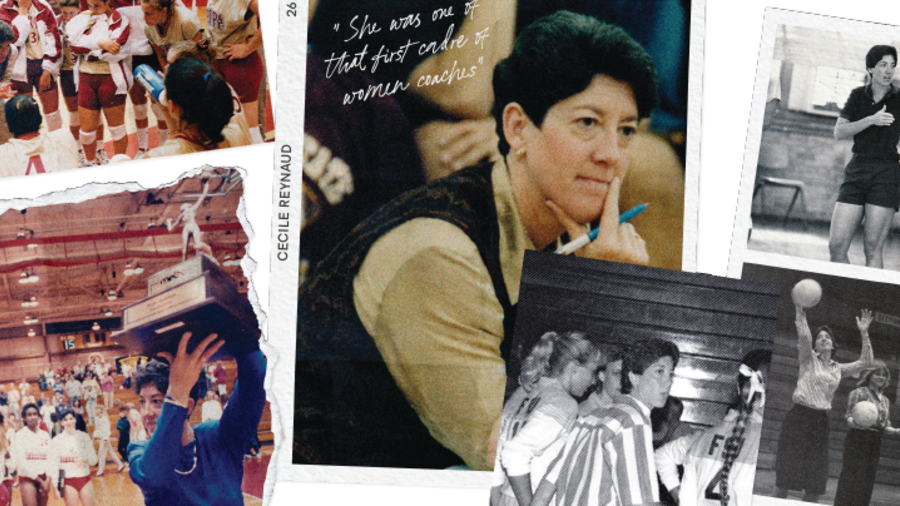
Coaching People: Alumna Cecile Reynaud
“People think they coach volleyball, but they don’t,” Cecile Reynaud said. “They coach people.” This philosophy defined Reynaud’s lifelong career at FSU.
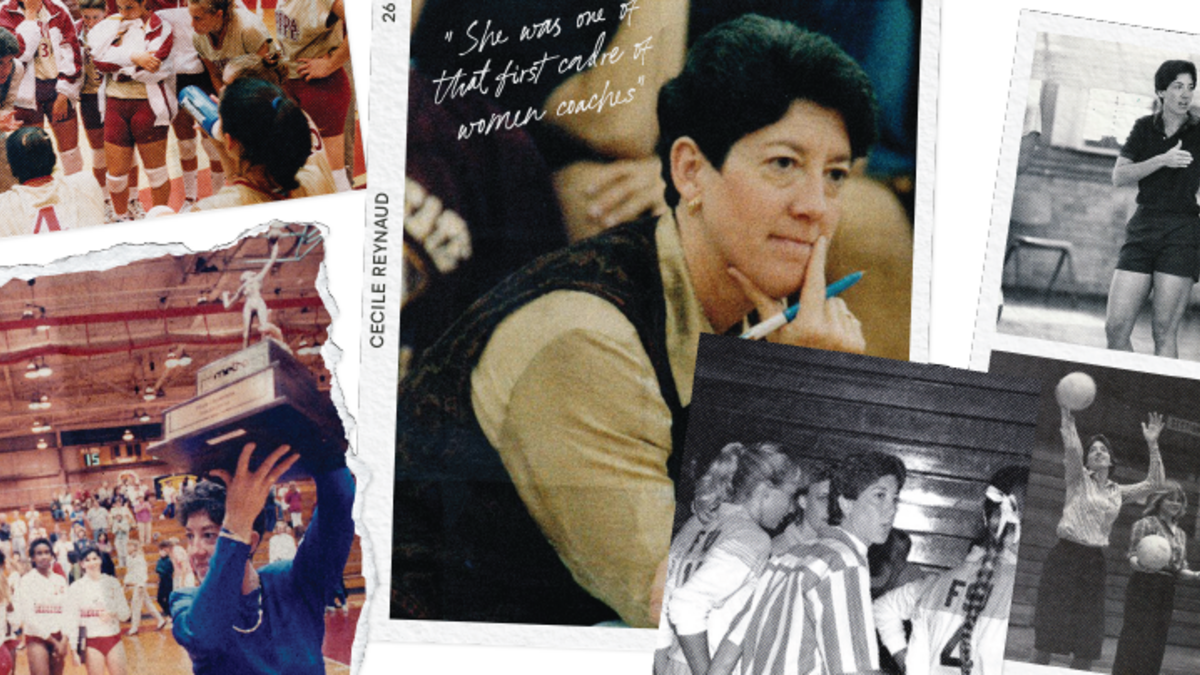


“People think they coach volleyball, but they don’t,” Cecile Reynaud said. “They coach people.” This philosophy defined Reynaud’s lifelong career at FSU.
“People think they coach volleyball, but they don’t,” Cecile Reynaud said. “They coach people.”
This philosophy defined Reynaud’s lifelong career at FSU.
Over the course of 26 years, Reynaud (M.S. ’78, Ph.D. ’98) set new standards of greatness for FSU Athletics as the head volleyball coach, earning 635 wins, seven conference championships, and three conference Coach of the Year awards. She is in the FSU Athletics Hall of Fame, the AVCA Hall of Fame, and the USA Volleyball Hall of Fame.
Reynaud previously served as president of the American Volleyball Coaches Association and chair of the USA Volleyball Board of Directors. She was also a founding board member and president of We Coach, a nonprofit organization dedicated to recruiting, advancing, and retaining women coaches across all sports and levels through year-round professional growth and leadership development programs.
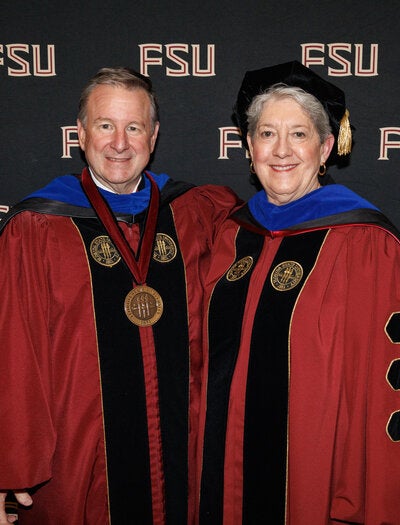
And this year, she earned one of the top honors at Anne’s College, the Distinguished Alumni Award, in recognition of her storied career and her impact on the people around her.
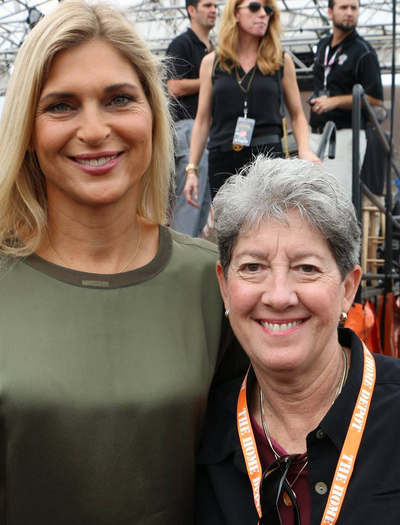
“I get asked a lot if I can name someone that impacted me and influenced my life in a meaningful way,” said former Florida State volleyball standout Gabby Reece. “And certainly, at the top one or two spots is Cecile.”
Reynaud’s career at Florida State began in 1976, when she arrived as a graduate assistant with the opportunity to lead the volleyball program.
She had recently graduated from Missouri State University, where she was a two-sport athlete playing field hockey and volleyball. She spent time teaching high school and coaching four sports in the small town of Steelville, Missouri, before taking a chance on FSU.
“I was only 22, but I took that leap and came to FSU,” she said.
Reynaud earned her master’s degree in physical education at Anne’s College while navigating the challenges of being a new, young coach.
“Some of the players were 22,” Reynaud said of the student-athletes on her team at the time. “And they wondered, ‘Why is she in charge?’”
That dynamic helped shape her coaching style. Early on, she learned it was important to build relationships with her student-athletes and earn their trust.
During this time, women’s athletics at Florida State were just beginning to take shape. JoAnne Graf, who spent more than three decades leading the Seminole softball program as one of the most successful coaches in FSU’s history, remembers those early years clearly.
“We kind of grew up in the profession together,” said Graf, who was hired three years after Reynaud came to FSU.
In those early years, resources were limited, coaching staffs were small, and much of the work fell directly on the head coaches themselves. Reynaud and Graf’s relationship grew out of that shared experience.
“When we were hired as the first full-time coaches, our offices were in an old house right across from the steam plant on campus,” Graf said. Her office was in the back bedroom space, while Reynaud’s office was upstairs. “I think it helped us bounce ideas off each other, which helped us grow professionally.”
The group shared space, ideas, and challenges, and built their programs alongside one another.
“She was one of that first cadre of women coaches,” said Alicia Crew, who spent more than 35 years at FSU as a leader in student affairs and campus recreation. “She was a part-time graduate assistant, like several others who were first hired in women’s athletics. They had to apply for their own jobs when it became a full-time position,” she recalled.
Even with a strong support network, building a program from the ground up over 26 years is no small task.
“Being a Division I head coach is time-consuming; it’s a 24-hour-a-day job,” Reynaud said. “If you're not competing, you're out of town recruiting. You've got to plan and run daily practices. You have to develop a competition schedule with teams around the country and in the conference. You travel to matches, work with parents, work with administrators, work with athletic trainers, work with strength coaches, work with the academic advisors, do public speaking, and fundraise.”
For Reynaud, the environment around her at FSU was key to her longevity as a coach.
“I ended up staying at Florida State University just because I felt comfortable here,” said Reynaud, who also coached alongside Bobby Bowden, Mike Martin, and others. “I could grow, learn from my coaching colleagues, and still be professionally engaged around the country.”
That sense of belonging extended beyond her own experience and shaped the culture of FSU Athletics as a whole.
“We were a close family of coaches, and it came down to the support that we had; support from the administration, the students, the community, and the fans wherever we traveled to play.
"We were able to attract great athletes to FSU. Anytime you would walk recruits and their families around campus, everybody was friendly. I thought that made a big impact on people.”
From the beginning, as a young coach, Reynaud worked hard to lead by example, Graf said. “You could tell her passion for volleyball, she just had a love of the sport,” Graf said. "And I think that type of leadership, combined with the caring she had for the student-athletes, really set her apart.”
Reynaud was invested in the well-rounded success of student-athletes. “She cared about them as people, not just athletes,” Graf said. “She wanted them to succeed in life as well as on the court.”
While Reynaud’s teams were certainly successful on the court, making 10 NCAA Tournament appearances, they also maintained one of the highest graduation rates in the athletic department.
“People don’t realize how hard it is to sustain that success,” Graf said. “But she was able to do it because of her passion, because of her work ethic, and because she recruited well.”
Recruiting, for Reynaud, was never just about talent.
“You’re taking care of the athletes on your team personally and academically, and on the court,” Reynaud said.
“It doesn’t matter what you know about the sport or strategies and tactics if you don’t have a relationship with the people. Nothing’s going to get done, you’re not going to win any games, and no one is going to have fun.”
That focus on people shaped not only who she brought into the program, but how those teams functioned once they arrived.
“The culture at Florida State for us was all about family,” said former volleyball student-athlete LaToya Davis, who played for Reynaud from 1995 through 1998. “We spent a lot of time with each other, and even though we were all competitors and we were all vying for spots, we really were a family.”
For athletes like Davis, Reynaud served as a role model as much as a coach.
“She believed it was important for women to have women coaches,” Crew said. “Being a good role model and an educated, excellent coach means a great deal to young athletes and to young women.”
Davis recalled a moment during her time at Florida State when she was expecting the birth of her daughter and was at a crossroads with her collegiate volleyball career.
“When I went in to talk to [Reynaud], I was so scared,” Davis said. “I just knew I was going to lose my scholarship.”
Instead, Reynaud responded with compassion and clarity, reassuring Davis, “You will be okay. You will finish school.”
Davis remembered, “She told me, ‘We’ll work with your doctor to make sure both you and your baby receive the care you need.’ She could have said I was losing my scholarship and that my time was over, but instead she said, ‘We’ll make sure you earn your degree.”
“It felt like she became a second mom to me,” Davis said. “She asked, ‘What’s the plan? What are we going to do? How can we make this work?’ And together, we did.”
In a congratulatory message she filmed for Reynaud, Gabby Reece described a similar impact, one that has stayed with her long after her playing career ended.
“As an athlete, I learned a lot about discipline and accountability,” Reece said. “But more importantly, as a human being, to be a decent person who shows up, who does what they say they’re going to do, who’s tough and loving, and who also keeps their sense of humor.”
Reece noted that Reynaud’s influence remains present in her daily life. “I have borrowed so many traits and lessons from her, in coaching and just in the way that I hope to show up in the world.”
Reynaud’s ability to develop and support people carried seamlessly into her role as a faculty member in the Department of Sport Management at Anne’s College.
After retiring from coaching, Reynaud advised hundreds of master’s students a year and still teaches courses in athletic recruiting, advanced coaching, and fundraising in sport. “It was a thrill to move into a faculty role,” she said. “For the first time in my career I had an opportunity not only to teach, but also to mentor and advise hundreds of men and women developing plans for their careers.”
As a faculty member, Reynaud draws on her experience in the sport management Ph.D. program, where her dissertation focused on student-athlete recruitment and students’ decision-making process behind choosing a university. In the classroom, she brings decades of experience to students preparing for careers in sport.
“I enjoyed working with students in the classroom and sharing my experiences from traveling the world, coaching, and participating in a wide range of sporting events,” Reynaud said. “It was rewarding to help them understand both the cultural and sport landscapes globally, and the many opportunities available to them.”
For Graf, that transition felt like a natural extension of Reynaud’s work as a coach. “The students who have gone through her class, you see how fondly they talk about her,” Graf said. “That says she’s more than just a teacher. They see that passion.”
Even after retiring from coaching, Reynaud has remained involved in volleyball. In 2022, she joined Major League Volleyball as vice president of volleyball operations, helping build one of the first professional volleyball leagues in the United States.
She oversees competition structure, playing rules, officiating, international player logistics, team coaches, and directors of volleyball operations, and is part of the overall league operations. The opportunity has allowed Reynaud to reflect on how much women’s sports and volleyball have evolved over the course of her career.
“When I first got involved in volleyball, there were no scholarships, and by the time I arrived at Florida State, we had only begun offering small ones,” she said. “Today, women’s athletics are fully funded, matches are televised, and social media has elevated the sport’s visibility. We’ve even seen the University of Nebraska volleyball team fill a football stadium with 92,000 fans to watch a match. It’s been incredible to see a sport you love grow into one that is widely embraced by the American public.”
For those who have worked alongside her, Reynaud’s continued involvement in professional volleyball is no surprise.
“She doesn’t stop. She’s always going to be there,” said Crew. “She’s going to say yes to speaking at banquets at every level, whether it’s junior high or national organizations. She’s going to show up, work on committees, and stay involved. She’s a very busy person. To remain friends with her, you have to catch her when you can,” Crew said with a laugh. “But I admire that—it’s not the easiest life, traveling all the time and always saying yes, but she’s done it in a very professional and helpful way for far more people than just those at Florida State.”
Over the course of her career, Reynaud helped build a program, mentor generations of students and athletes, and contribute to the growth of volleyball.
“Cecile really has impressed me, particularly over the long haul with her integrity, with her ability to stay positive, to require others to try to be more positive, to encourage people, and to meet each other on a common ground,” said Crew.
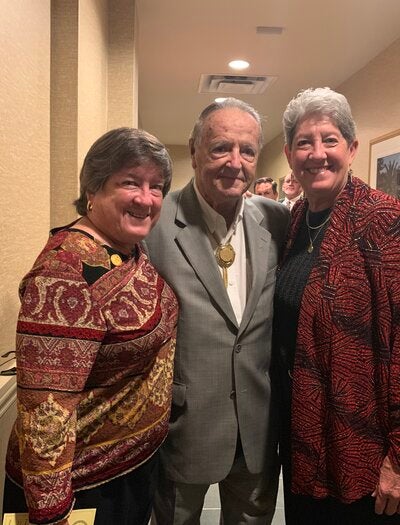
“She mentors people coming up, whether they’re student-athletes or professionals,” Graf said. “If you have her in your life, you’re very, very lucky.”
“I’d like to be remembered for the relationships I have with people,” she said. “And being able to help young women and men be successful in their lives.”
It’s the same philosophy that has guided her from the beginning. Not just coaching volleyball, but coaching people.
Learn more about the journey and impact of Cecile Reynaud in our video feature: