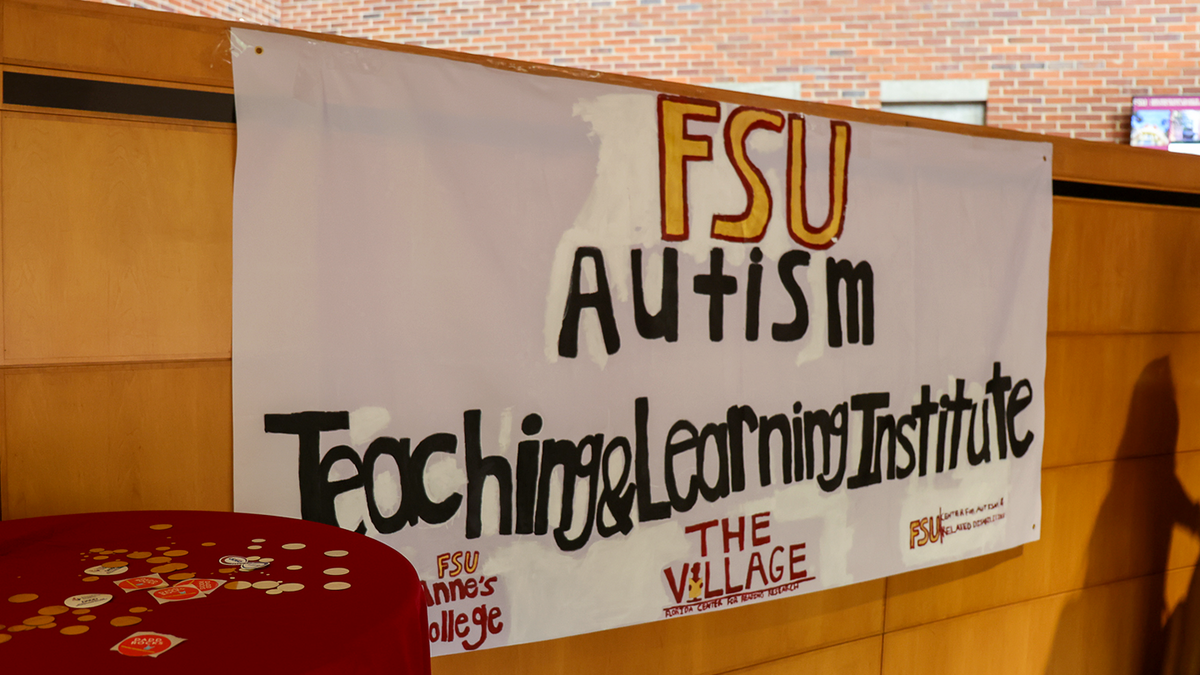
The event’s multidisciplinary approach benefited the 200-plus attendees, with eight different strands offering a variety of topics. Emphasizing high-leverage practices and evidence-based interventions, the one-day experience covered all the critical aspects of professional development that proved to be more advantageous than a one-size-fits-all model.
“One of the core principles of the institute is that there is no single pathway to supporting autistic learners because there is no single type of educator who supports them,” Root said. “A preschool teacher, a middle school mathematics teacher, a speech-language pathologist and a university professor all have different roles, responsibilities and professional learning needs. Rather than asking everyone to sit through the same sessions, we designed targeted strands that allowed participants to choose learning experiences most relevant to their work and their current level of knowledge.”
The collaborative effort included staff members from FSU’s Center for Autism and Related Disabilities (FSU CARD) and members from the Board of Directors of the Council for Exceptional Children’s Division on Autism and Developmental Disabilities (DADD). A mix of professionals — including school teachers, speech-language pathologists, occupational therapists, behavior specialists, administrators, paraprofessionals, transition specialists and higher education faculty and staff — converged at Stone Building to learn and share their experiences with others.
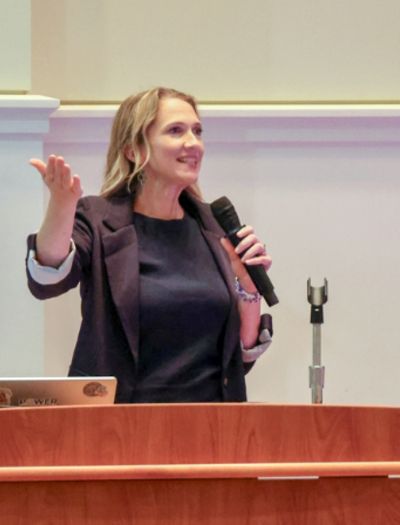
Addie McConomy, an assistant clinical professor and program leader at Anne’s College, was one of several special education staff members who led interactive workshops, roundtables and learning sessions. In the afternoon, she led a “Create Supportive Learning Environments” session that focused on teachers applying some of their own concepts to their autistic learners.
“Classroom environment establishes the foundation for all learning,” McConomy said. “Many classrooms have great routines and strategies in place to support learning. However, some students may need the classroom routines and strategies explicitly taught, and this is a step that is often overlooked in busy classrooms. I hope that teachers invest the same time into teaching their routines as they do building their routines.”
McConomy’s goal for each of her sessions was to ensure educators leave equipped with best practices that fulfill both themselves and their learners.
“The institute was implementation-focused and each session emphasized practical applications that we hope educators can put into practice right away,” McConomy added. “These professional development experiences bridge the gap between research and practice and should prepare teachers to support all student learning.”
The institute looks to carry its momentum forward after a successful debut. Growth and evolution will include listening to participants and community partners on feedback from the event, whether that means expanding capacity, offering additional learning strands or bringing together a broader range of professionals.
The early response shows demand will be high for next year.
“This was always envisioned as more than a one-time event,” Root added. “Our goal is to build a community of educators who are committed to improving educational outcomes for autistic learners and who continue learning from one another long after the institute ends. The response to this inaugural institute certainly suggests there is an appetite for that kind of professional learning.”
By combining research-based instruction, practical training and collaboration across professions, the FSU Autism Teaching and Learning Institute reflects FSU’s growing role in preparing the next generation of educators to support autistic learners and improve outcomes across the lifespan.
This article originally appeared on news.fsu.edu