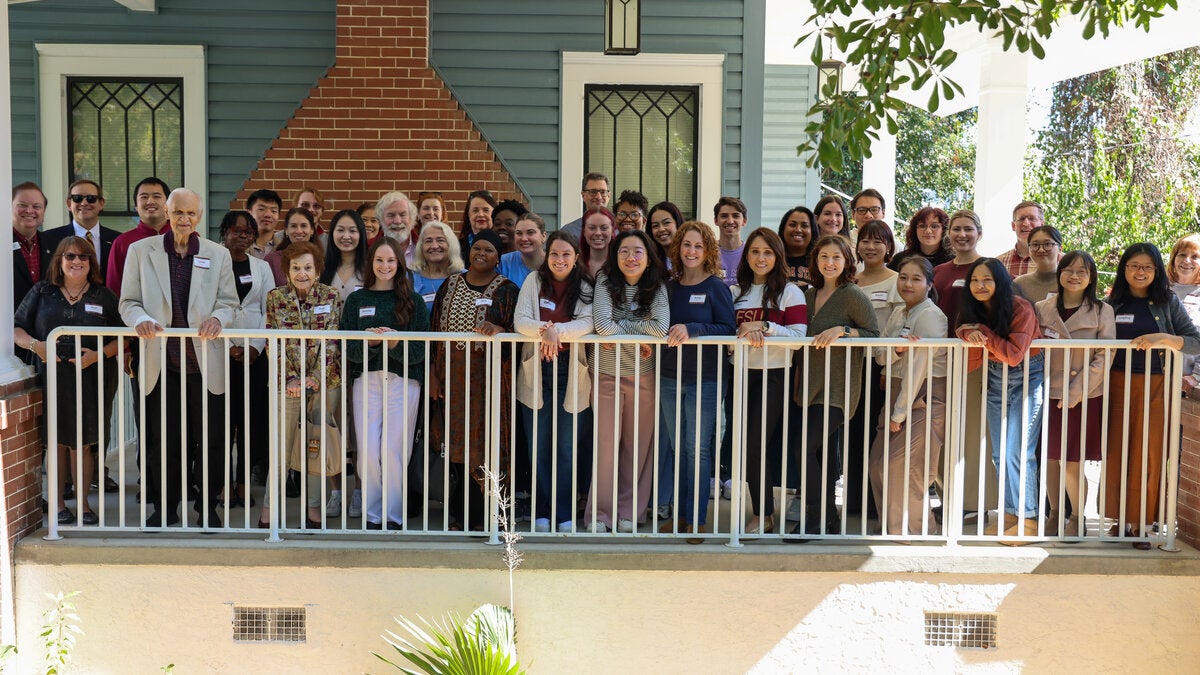
In 1950, Florida State University launched the Interdivisional Doctoral Program in Marriage and Family, bringing together faculty from across the university to educate students on relationships, development, and family life. The program was one of the first of its kind in the United States, placing its founding early in the university’s history. Homecoming began just two years earlier in 1948, and Florida State had only recently become a coeducational institution.
While the field itself was newly emerging, the program was built on the idea that people are strongly influenced by their relationships and the family systems around them. FSU was among the early institutions that combined multiple perspectives to better understand people's needs, relationships, and families.
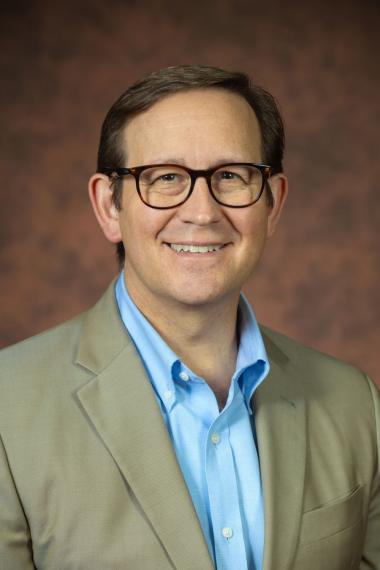
“There was a combination of faculty who put forward the program,” said Paul Peluso, chair of the Department of Human Development and Family Science at Anne’s College and Norejane Hendrickson Endowed Professor. “And there were areas of study that you could specialize in, including couple and family counseling, family life, and child development.”
Those early areas of focus would later evolve into two distinct programs at Anne’s College, Human Development and Family Science and Marriage and Family Therapy. The college now offers bachelor’s, master’s, and doctoral degrees in Human Development and Family Science (HDFS), and a doctorate in Marriage and Family Therapy (MFT).
Interdisciplinary foundation
The programs’ pioneers determined early on that understanding family systems requires an interdisciplinary approach, which remains central to both programs today. Like the original interdivisional doctoral program, students and program faculty regularly collaborate with researchers across the university, including the colleges of social work, nursing and medicine.
“Working with faculty in other colleges really broadens students’ ability to formulate research questions and do meaningful work,” said Peluso, who became chair of the Department of Human Development and Family Science in July 2024.
In the HDFS programs specifically, many students conduct research spanning multiple disciplines.
“If you take psychology, public policy, sociology, and health and put them together, that overlap is where Human Development and Family Science really lives,” Peluso said.
With broad roots in social sciences and health, HDFS programs can be difficult to define, but that breadth is part of what makes it an appealing choice for many students.
“There’s the sociology side, looking at variables related to families, parenting, and couples that are more population-wide,” he said. “But then we also zoom it back down to the individual family, the individual relationship, and make it applicable.”
Health connection
Health has also become an increasingly central component of the field as it has evolved.
“In exercise physiology, there’s the term ‘exercise is medicine,’” Peluso said. “But I would also say families are medicine. Relationships are medicine.”
He said there’s been a growing shift toward bringing behavioral health and family life into medical care, so providers can better support patients and their families.
“Looking at FSU Health, the Department of Human Development and Family Science has a really important role to play, both in the knowledge base we bring to health delivery and in helping to shape and grow that knowledge through unanswered questions,” he said.
That work also reflects the close connection of health and family systems.
“We’re looking at the impact of health on families and the impact of families on health,” Peluso said. “From the MFT side, it’s how we work directly with families of patients and help them cope with chronic disease or maintain health. The family is a really important part of maintaining health goals or getting people back to healthy lifestyles.”
The intersection of health and social science is what pulls many students in, sometimes unexpectedly.
“They might have gone into psychology first, or a pre-nursing track,” he said. “And then they realize this is what they wanted all along. They wanted to work with families.”
Many undergraduate students take Family Relations as a general education course at FSU and find the HDFS major through that route.
“They take that course and they go, ‘Oh my gosh, you can study this? You can major in this?’” Peluso said. “So, it becomes a really good introduction to what we’re all about.”
Many HDFS students pursue careers in healthcare fields like medicine, nursing, and physician assistant programs, pairing their scientific training with a deeper understanding of human relationships. Others move into mental health counseling, marriage and family therapy, public policy, law, government roles, or nonprofit leadership.
“It offers a knowledge base that they can take with them as they go into a wide variety of fields,” Peluso said.
Decades of training future clinicians
While many students find their way into HDFS through coursework, the department’s Marriage and Family Therapy doctoral program follows a more defined clinical pathway.
Their clinical training takes place at the Center for Couple and Family Therapy on campus, where MFT students gain hands-on experience working with individuals, couples, and families under faculty supervision. The MFT program has been offering services at the Center for Couple and Family Therapy in some capacity for more than 40 years, making it one of the oldest accredited couple-and-family therapy centers in the country.
“The quality of the clinical work that's being done there is incredible, and the potential for it to do much more is also incredible,” Peluso said, noting the college’s interest in growing the center.
“Part of the clinical instruction at the doctoral level is getting students to be more sophisticated in how they see cases, and training students to become clinical supervisors themselves,” he said.
Upper-level doctoral students gain experience serving as supervisors to first-year doctoral students and master’s students in the Clinical Mental Health Counseling program, also offered by Anne’s College.
“Supervisory experience is really crucial in helping students develop their own clinical professionalism, clinical sensibilities, and clinical judgment,” Peluso said.
Advancing research and real-world impact
Research is another key part of preparation for both MFT and HDFS students, driving the program’s growth and its real-world impact.
“Research is crucial in the clinical field,” Peluso said. “There are so many questions that are still not yet answered about how effective we can be with certain populations or the challenges couples and families are bringing in.”
Research efforts reinforce the department’s interdisciplinary approach.
“Even if students are on the MFT track, they have access to faculty in HDFS with expertise in family science, child development, and parenting,” he said. “That really broadens their ability to formulate their own research questions and do meaningful work.”
It’s one of the program’s unique strengths, according to Peluso. “The research base they get is incredibly rigorous and sophisticated—probably more sophisticated than a lot of doctoral programs I’ve seen.”
Faculty research explores development across the lifespan and how it is shaped by societal changes. Faculty conduct research in the areas of child development, adolescent development, young adult development, and aging development and how individuals develop later in the life.
With every shift in society, Peluso said, new questions emerge about how families function, how people develop, and how relationships are shaped. The latest questions that faculty research include families and social media, as well as the impact AI has on kids and family relationships. HDFS and MFT faculty bring a unique perspective to these pressing topics.
“Who knows how to study the potential impact of these things? Well, that’s us,” Peluso said. “And when those pressures are impacting your family’s relationships, that’s where marriage and family therapy comes in.”
Building on 75 years
That ability to evolve alongside society is what has allowed the programs and their broader fields to thrive for more than 75 years, with FSU consistently at the forefront.
“I’ve learned that FSU is an elite university, but it’s not an elitist university,” Peluso said. “People here are genuinely committed to everyone’s success, whether it’s student success, faculty success, or staff and administrator success. And it’s palpable. There’s a refreshing sense of belonging and a sense of caring that really distinguishes FSU from other highly ranked universities.”
That culture has helped the program recruit new students and remain connected to alumni. Many faculty and alumni remain closely connected to the program long after they leave.
“They still have a deep love for FSU,” Peluso said. “They send their students here, they speak really highly of the program, even if they haven’t been here in 10, 15 or 20 years.”
It’s something he’s seen firsthand at national conferences.
“I’ve been to the American Association for Marriage and Family Therapy conferences, and the reputation of our department is really strong,” he said. “And then on the HDFS side, at the National Council on Family Relations, it’s the same thing. The presence is strong because of the quality of our faculty, our students, and our alumni.”
The connection is genuine, he says. “You can’t fake that; you can’t buy that. It just comes because people feel it.”
Looking ahead, the department is focused on continuing its legacy by expanding opportunities for students. Faculty are updating curriculum to reflect emerging issues in the field, while new academic pathways are being designed to better prepare students for what comes next.
The department launched a combined B.S./M.S. pathway in Human Development and Family Science that allows students to double-count some classes toward both their bachelor’s and master’s programs, fast-tracking their path to a master’s degree.
Having a master’s degree makes students more competitive in the job market, Peluso said. “Especially if students apply to further training, whether that’s medical school, nursing school, or PA school, which are highly competitive.”
The department is also working to expand its academic offerings and programs in Marriage and Family Therapy. That growth includes expanding clinical training opportunities, building new degree pathways, strengthening research, and continuing to introduce new students to the field.
With momentum and excitement behind both programs, Peluso sees a bright future ahead for his department. Driving that is the core understanding that while family dynamics, structures, and issues might change over time, the topic will always be relevant.
“The one thing that never changes is that all of us have families,” Peluso said. “All of us have relationships.” And that’s what keeps the programs moving forward, grounded in the interdisciplinary approach that has defined it from the start, 75 years ago.