B.S.
Nutrition and Food Science
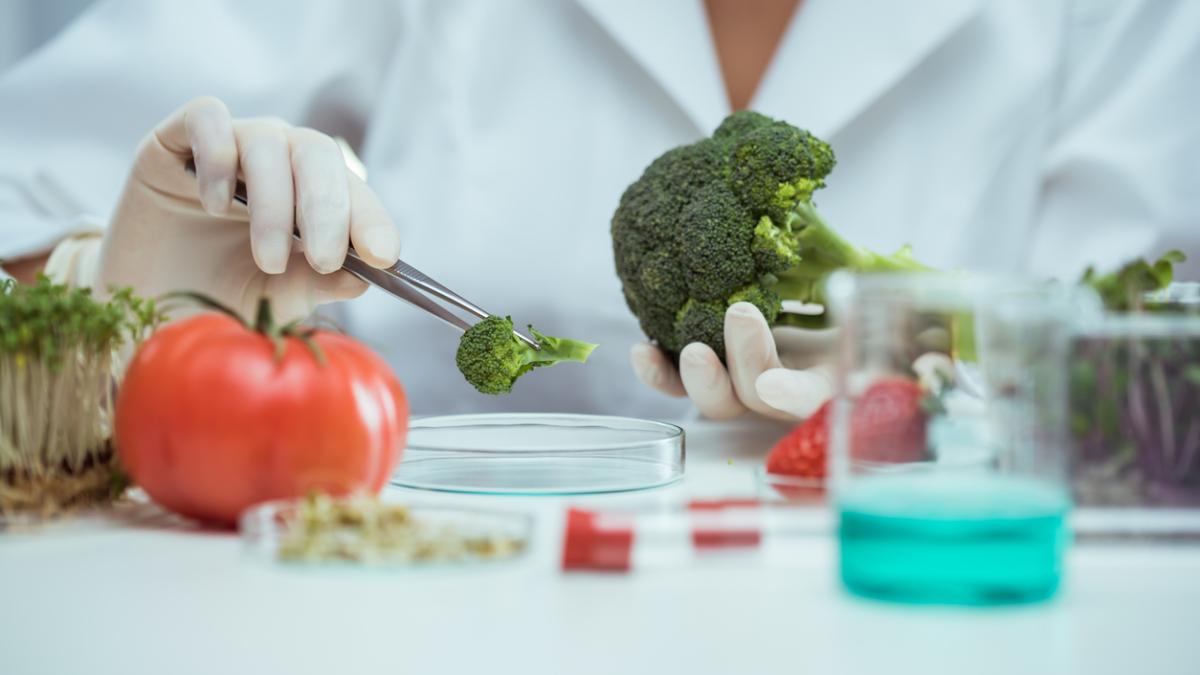



This major gives students an in-depth understanding of various scientific aspects of nutrition and food. Students study nutrient functions and requirements, metabolism, food quality and safety, the composition and chemical properties of foods, and changes in foods caused by processing, storage and preparation. Besides studying nutrition, food science, biology and microbiology, majors must take physics and complete extensive coursework in organic and analytical chemistry.
The major has a strong science base that prepares students for job opportunities in the food industry, government agencies, careers in the medical field, and graduate study in the field.
The undergraduate student is usually preparing for an advanced degree with specialization in Food Science or Nutrition and a career in university teaching and/or research, medicine, the food industry, or government. With proper advising, this program can also serve as a pre-medical curriculum.
The Nutrition and Food instrument laboratory provides a setting for chemical, analytical, and microbiology testing with new and updated equipment. The lab complex also features a new Cold Lab for research requiring constant low temperatures.
Admission Requirements to the Upper-Division Major
Students must complete at least 52 hours of credit with a minimum grade point average of 2.0, at least half the required General Education hours, including all English composition and mathematics, or an A.A. Degree.
Students must complete the following courses (C- or higher) in preparation for upper-division coursework in the major. All of the following may also apply toward General Education and/or major coursework
Students must complete the following courses in preparation for upper division coursework in the major. All of the following may also apply toward General Education and/or major coursework. Each must be completed with a final grade of C minus or higher unless otherwise noted.
| Course # | Hours | Name |
|---|---|---|
| MAC X311 | 4 | Calculus I |
| BSC X010, X010L | 4 (3+1) | Biological Science I (and lab) |
| BSC X011, X011L | 4 (3+1) | Biological Science II (and lab) |
| CHM X045, X045L | 4 (3+1) | General Chemistry I (and lab) |
| CHM X046, X046L | 4 (3+1) | General Chemistry II (and lab) |
Note: State-wide common prerequisites are always under review. For the most current information and for acceptable alternative courses, visit the “Common Prerequisites Manual.” This is available from the “Student Services” section of http://www.flvc.org.
